
Simply put, bonsai is an art form. The art is made by us trying to grow our trees so they look like huge ancient trees, but in miniature.
We sometimes need to manipulate the bonsai trees in various positions to get the look we want. One of the best ways to do this is by using bonsai wire.
Page Contents
Why Do We Wire Bonsai Trees?
Bonsai wire allows us to change the position and shape of different parts of the tree so that it is more aesthetically pleasing and helps us reach our artistic goals.
Bonsai trees are just normal trees and they often grow long and straight, which is not very interesting to look at. Bonsai wire can allow us to put movement into this boring straight growth, as well as allow us to grow it in a different direction or at a different angle, which again, will make it more interesting.
Being able to move parts of the tree around and have them stay in position allows us to start creating a bonsai that is very pleasing to look at. We can very easily take something that is ugly and boring and wire it to look far more interesting.
We can also wire a treefor horticulture reasons. This not as common, but it does happen sometimes. This happens if two branches where competing in the same area, you could wire them and move them in opposite directions so that they where no longer competing with each other.
(If you are adding wire, you will also want to read more information about – When Do You Remove The Wire From Your Bonsai)
What Parts Of A Bonsai Can We Wire and Why?
Wire can be added to pretty much every part of the tree and this will be done for different reasons and at different times of a trees life as a bonsai.
I will now go through the main areas that we would wire on a bonsai, and explain why.
Wiring The Trunk Of A Bonsai
The trunk of a bonsai is like the spine, it’s a foundational structure of the tree.
In the same way the human spine plays an important role in our posture and how we appear, changing a trees trunk can have a massive change on how a tree looks.
Not every tree will need its trunk wired, but those that do, will see drastic changes. It is also not possible to wire all tree trunks. Some may just be too big or thick and some species are just not as flexible as others.
The main reason trunks are wired is to give them movement. Long straight trunks are boring, especially if they have no taper. Wiring can add all sorts of movement from subtle flowing curves all the way up to extremely aggressive twists and bends.
This can be a huge operation for the tree and can stress the tree a lot, so how and when you do it can be important.
Wiring a young tree trunk, such as a sapling is usually the best. They are normally thin and quite flexible and can handle being bent.
They will have their trunk wired and shaped before being allowed to grow large. As the tree is small you will see some crazy twists and bends put into the trunk, but as they grow out these bends become less extreme and end up looking very aesthetically pleasing.
This is the point where the common ‘S’ shape trunks are produced. This is also a good time to put drastic shapes into trees like pines and junipers which will benefit from these when they are older.
You can bend older trees, but this is normally a lot more difficult and stressful for the tree as it is will be thicker and harder to bend. It is mainly junipers are pines that go through this work. These trees do not back bud easily, so they can’t not simply be cut back hard and let to grow out and allowed to be rebuilt. You have to work with what you have and sometimes that means giving a trunk a drastic bend.
Often this is done to compact the tree by basically folding it back on itself. This can be a very difficult procedure to do and shouldn’t be tried by someone who hasn’t got the right experience.
Trunk wiring is also useful in forest plantings or multi trunked trees. Each trunk can be given a similar movement so they all complement each other.
This will make the planting look like a collection of similar trees that have all been grown in the same conditions, and forced to grow in the same way. It will just look more natural than having a load of trunks with different shapes and going in different directions.
The trunk is usually wired once in a trees life. As it is a foundational element it will not be changed much once it is set.
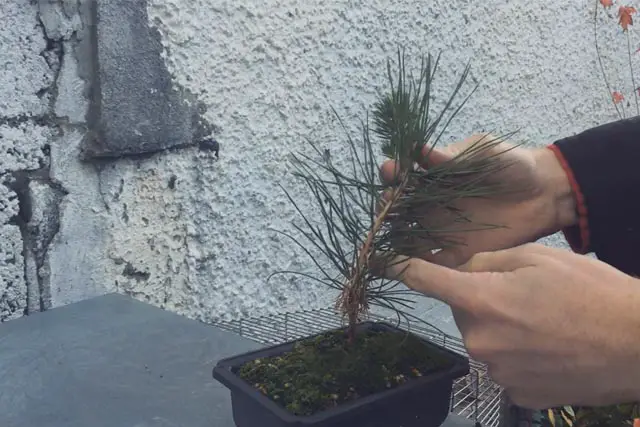
Wiring The Primary Branching Of A Bonsai
Primary branches of a bonsai are the ones that come directly off the main trunk. These play a vital role in setting the overall look of a bonsai tree.
They are wired mostly for aesthetic reasons, but it can also be horticultural.
Normally a primary branch is wired to move it into a better position. This is might be up or down or even moved from one side to another.
When trees grow they can be a bit sporadic with where their growth goes, this can make them look messy or even just bushy. By wiring branches and moving them we can spread them out in a more aesthetically pleasing way.
As a general rule, the primary branches will all copy each other in their movement. If most of the branches come out of the trunk at a nice flowing angle, then one comes out just straight perpendicular, it’s going to look out of place. By moving this one to also come out a more flowing angle, the overall tree will look better.
Some branches are also repositioned for horticultural reasons. Some branches may be too close together, or growing on top of one another. Although moving them will probably make the tree look better, it also allows both branches to now get more sun light.
This can be important as if branches do not get enough light, they can die back. This is also true for the inner structure, by wiring out a branch it can drastically open the tree up and really increase the amount of light that can get to the inner structure. You want this to happen so that the inner parts back bud. You can then eventually cut the branches back to these inner shoots. This will make the tree more compact.
Primary branching is usually only wired once during the initial styling. Much like the trunk, they are foundational so once they are set; they are often not moved again.

Wiring The Secondary Branching Of A Bonsai
Secondary branching of a bonsai is usually a lot smaller and thinner than primary branching. This means that it can be very flexible and is ideal for wiring.
Usually once a bonsai tree has its trunk and primary branch set, the secondary branching’s position isn’t as important. It can often look great from using only directional pruning to style it to shape.
However, some bonsai trees will still have their secondary branching wired. This may be once or maybe a few times throughout the trees life.
As these branches are usually a lot smaller they can be shaped a lot more than the primary branches.
Once a tree has had it secondary branching wired, the tree will look very styled and refined.
Wiring Branch Tips/Fine Branching Of A Bonsai
It is usually rare to wire out further than the secondary branches in deciduous bonsai trees, usually at this point directional pruning is more than enough to shape a tree.
However in pines and junipers you will often see branches wired out all the way to the tips. This is usually because this is where most of the foliage is. By wiring out this far, the needles can be pointed upwards.
This both helps them get more light, as well as making the tree look like it is older.
What Are Bonsai Guy Wires?
Sometimes wire is not wrapped around the branch, and instead a guy wire is used. Sometimes these are called a “guide wire“, I’m guessing this is just a mispronunciation, but the name still works.
One end of a wire is tied to the end of a branch. The branch is bent to where it needs to be and then the other end of the wire is attached to the bonsai pot. This is done tightly, so the wire stops the branch moving back when you let go and will hold it in its new position.
This is a great technique when a branch needs lowered. It saves on having to fully wire out a branch, which can damage the bark.
Caution is needed as branches can easily snap if too much force is put on the bend. Wiring a branch on a bonsai will normally spread the force equally if applied right, where as a guy wire will only be holding the force at one spot, which can make it easier for snaps to occur.
You can use normal wiring techniques and guy wires combined if you are bending a difficult branch that may need that extra support.
(You can read more about – Frequently Asked Questions About – Bonsai Wire)
Wiring A Bonsai Tree Into The Pot
bonsai trees are also wired into the pot, this isn’t for aesthetic reasons, but just to keep them secure.
Planting a bonsai tree with a small root ball into a small pot and also using a loose soil mix can be a recipe for a disaster. The tree can be easily knocked out of the pot so wire is used to tie it into the bonsai pot to keep it safe.
This is also useful if you have planted you tree at a certain angle. The wire will hold it in the position you have placed it and it will not shift from here.
Conclusion
Wire is an import aspect of bonsai work and there are many reasons why and where it is used.
Hopefully now should now have a better understanding of why certain parts of the trees are wired and what the goal of doing this is. You should try and think about how you would use these techniques on your own tree to help improve their aesthetic styling.
You can also read more information about – What Is Bonsai Wire?

Hi, I’m Ian. I have been doing bonsai since 2014. I created this site to spread all the knowledge I have acquired over the years. Don’t forget to check out my Youtube videos where I show the progress of my own Bonsai each week or connect with me on social media.
You can read more about me and how I got into Bonsai on the About Page
