
You might have heard of bonsai trees being described as “Masculine or Feminine”, but what does this mean and what is the difference?
Basically it relates to their artistic design and aesthetic feel. It has nothing to do with the actual gender or anything horticultural/biological.
Page Contents
Where Did Masculine And Feminine Bonsai Come From?
I’m not sure exactly when or where the terms originated from, but I’m guessing it was many, many years ago. Maybe in today’s world we could use two different words that would be better suited.
Regardless of what you think of the two words used, the basic concept of these labels is to just indicate that there is a difference between how trees can look.
Bonsai trees can look vastly different and giving a tree a “gender” helps us identity between them.
What Is The Difference Between Masculine And Feminine Bonsai?
Imagine the gender of a bonsai as a scale, masculine on one end and feminine on the other end.
This scale helps us to try and objectively measure and evaluate the differences between the trees.
This will help us verbalise what we see and feel more clearly when we are looking at the bonsai. Its will also help us understand why certain aspects are grouped together, and why we find them more aesthetically pleasing.
In general masculine bonsai trees have more angular movement and are overall bulkier and heavy looking.
Feminine bonsai trees are at the other end of the scale with more curvy and flowing movement with a more delicate look and feel to the tree.
There are a number of individual factors that contribute to how we decide if a tree is more masculine or feminine looking. Although these factors are an attempt to objectively evaluate a tree, you must remember that this is art, so it can still be quite subjective.
What Factors Determine A Bonsai Trees Aesthetic Gender?
If we look at the following attributes of a tree, we can start to objectively see the difference between a Masculine and Feminine bonsai:
Trunk
The size, shape and movement of a trunk will help decide if a bonsai is more masculine or feminine.
A thick, straight, short trunk will be seen as more masculine and a slim, long trunk with gentle movement will be seen as feminine.
Taper is also another aspect of the trunk that is looked at. A tree that tapers very quickly would be masculine. If you think of a short squat tree that goes from very wide at the base and quickly tapers in at the top.
Where as a feminine tree would slowly taper from thick to thin, gently getting smaller as the trunk moves up.
Root Base
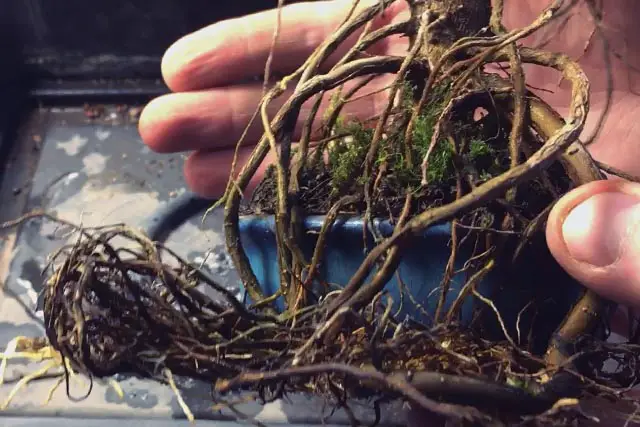
The roots of a bonsai tree are very important and how they look as they enter the ground is a huge part of bonsai.
A tree that has a wide spreading root base that looks like it is gripping the ground powerfully is masculine, where as a tree where the root base isn’t as spreading and thick looking would be feminine.
Bark
Bark on a bonsai that is thick and textured is seen as masculine, while thin delicate bark is feminine.
Branching
The branching of a bonsai again comes down to differences in movement.
Branches with sharp angular changes in direction will be seen as masculine where as those with gentle flowing lines and curves will be seen as feminine.
The weight of the branches should also be considered. This means how much foliage is on the branch and how dense it looks.
A branch with light and airy branches that looks delicate and open will be feminine, where a branch that is thick, heavy and looking as it is full of foliage will be classed as masculine.
Dead Wood
Bonsai tress with any type of deadwood or any sort of scaring and hollows or similar characteristics will be seen as masculine. Trees that have these features look like they have struggled and battled against nature for many years and have suffered from it.
Feminine bonsai trees will not have any deadwood and should appear like they have not suffered this same struggle and not look as rugged.
Negative Space
Negative space in bonsai can be a difficult concept to grasp as a beginner. It’s basically looking at where the tree is not. If you have a bonsai tree with lots of spaces and gaps in between the branches, this empty space is called negative space.
Often trees are styled and designed with these empty gaps in mind and they are deliberate decisions and are carefully thought out.
It sounds very strange, but you have to have to look at the problem backwards. If you want to find out where the branches should be on a bonsai, you sort of need to ask where they shouldn’t be.
If you can think like this, you will start to understand why branches have been placed in certain positions and why there are gaps left in other places.
The amount of negative space can really change the look and feel of a tree. If a tree has more negative space it is going to more open and light looking, which is a more feminine.
Trees that have less negative space will seem denser, and heavier as the branches are not going to have any space between them, which you will probably tell by now is more of a masculine look for a bonsai.
Leaves
The leaves and foliage of a bonsai tree are probably one of the least important characteristics in regards to masculine and femininity.
You could argue you that some leaves are more feminine than others based on their softer shapes or colours but usually this not the case.
Species
You also will often hear whole species being described as masculine or feminine in bonsai. This is because, in general different species tend to grow and display their characteristics in a way which places them more on one end of the gender scale than the other.
However, as with everything in life, there are always exceptions to the rules and each tree should be evaluated individually.
If we look at Japanese maples, they are usually described as feminine bonsai but you can quite easily find endless examples of these displaying more of the masculine characteristics.
The same is true for pines, which are commonly referred to as masculine bonsai. However, we can again very easily find countless examples of more feminine looking pines.
The easiest way to get around this to individually evaluate each tree and decide form there what gender it should be attributed.
Bonsai Pot Selection And Gender
The bonsai pot that is paired with a tree can have a huge effect on the look of the trees over all aesthetics.
There is an endless amount of different pots designs with various shapes, colours and sizes. Some pots will work much better with a tree than others and it mainly comes down to gender aesthetics.
Pots should complement the tree, subtlety echoing the trees character and features.
Masculine bonsai trees will be better suited to pots that also have harder angles with a thicker look. They also tend to look heavy and sturdy. The feet of the pots will also be well defined. The pot will look well grounded and strong. This will commonly been seen in rectangle shaped pots.
Feminine bonsai trees look more flowing and have soft curves, so they will be better suited to pots that also echo this, such as pots that have rounded edges. Oval and round pots are perfect examples of this. Feminine pots will also usually be shallower and the feet will be less pronounced. The pots will look vary dainty and delicate.
The colour of the pots also plays a role. Colour is often used to complement aspects of the trees such as matching the colour of the flowers or foliage.
Quite often masculine bonsai pots are darker and use more earthy tones like browns and blacks. They are also usually unglazed. This will often complement the darker, thick bark seen on masculine trees.
Feminine bonsai pots tend to use more lighter or brighter colours and are often glazed which will usually echo the trees overall look.
(You can read more about – What Shape Bonsai Pots Can You Get?)
Why Is The Gender Of A Bonsai Important?
So, now we can tell the difference between the gender traits of a tree, why is any of this important? Does it really matter if my bonsai tree is more masculine or feminine?
The main reason for any of this is for styling and aesthetic beauty. Although bonsai is all about growing trees and caring for them, it is also predominantly an art form.
Following The Guidelines Will Get You A Better Tree
Although there are no real rules and you can do whatever you want, it is fair to say that following some basic aesthetic guidelines will really help you style your tree in a way that will exaggerate its natural beauty and characteristics.
If you are aware of the factors above, you can start to evaluate your tree and make stylist decisions that are going to better suit it.
Bonsai styling and design is all about balance. You need to balance every aspect of the tree and weigh up what you have to work with and what you can do with it.
If you have a tree with a really slim trunk with gentle curves, you should now understand that it’s going to be better to style the branches in a way that complements this. The tree will look more balanced. Also putting it in a shallow oval pot will bring further balance. The light top structure will look more balanced in this style of visually lighter pot.
But what if the tree I have just described is a pine, a classic masculine tree, with thick bark. What then?
This is the beauty of art and its subjective nature, it’s up to you to weigh all of this up and work out what is the best balance.
If you feel the majority of the trees characteristics are leaning towards the female end of the scale, then lean your artist styling in that direction, exaggerate those properties in an attempt to balance the tree out so you minimise the features that may go against this.
Conclusion
You could probably write endless books on the nuances of artistic styling and aesthetics design in bonsai.
It’s such a huge topic, but these objective traits and characteristics play a fundamental role throughout so I feel it is important to recognise them and work with them in order to raise the overall level of your trees.

Hi, I’m Ian. I have been doing bonsai since 2014. I created this site to spread all the knowledge I have acquired over the years. Don’t forget to check out my Youtube videos where I show the progress of my own Bonsai each week or connect with me on social media.
You can read more about me and how I got into Bonsai on the About Page
