
Wiring a bonsai tree is an important part of bonsai but if you are new to the hobby it can seem like a very strange thing.
You are probably wondering what it is all about and what exactly is bonsai wire and how it is different to any other wire? and where exactly do you get it form? …which is what I will be going through below.
Page Contents
What Do We Used Bonsai Wire For?
Bonsai wire is used to style trees into the shape we want. To make bonsai look better we need to move the position of some of the branches.
Some branches can be growing at the wrong angle, or direction and we can manually bend them into a better position. However, the second we let go they will just spring back to their original position.
Wire allows us to move the branches and the resistance from the wire keeps it where we want. All we have to do is wrap the wire around the tree in a certain way and then we can then position the branches in a more aesthetically pleasing way.
As the tree grows, this new position will set in place and then we can later remove the wire and have the branch exactly where we want.
A good way to think of it is like how we use braces for our teeth to move them into a better position. Wire is only temporary, but the results remain. I have written a much more detailed article on – Why Do We Wire Bonsai.
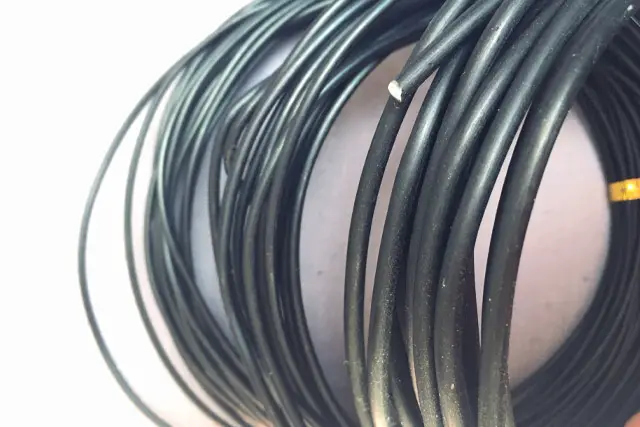
Is Wiring A Bonsai Common?
I would argue that wiring your tree is going to be essential. Nearly all trees will need some wire at some point during its development, so I asked my Youtube subscribers if they wire their trees or not and here are the results
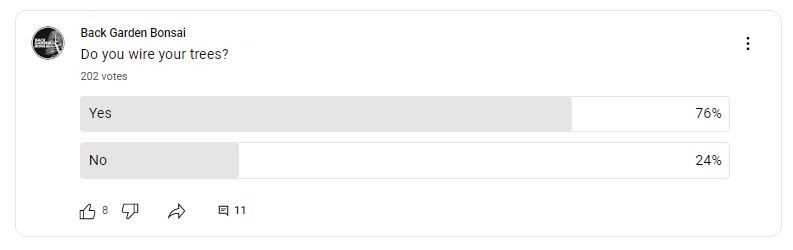
As you can see, 76% of people do wire their trees. I thought that might be higher, but I guess some people use other techniques.
(You can read more about – Are There Any Alternatives To Using Wire For Shaping Bonsai?)
What Is Bonsai Wire Made Form?
There are two types of bonsai wire that you will see available – Aluminium and Copper. Both can be used interchangeably, but there are some slightly differences and also advantages and disadvantages to using either.
Aluminium Wire
Aluminium bonsai wire is very soft and it is easily bent. This is good for a beginner as they can learn how to wire a lot more easily when using it.
Being able to apply wire is actually pretty hard, so if you have something you can easily work with it does help a lot.
However, its main downside is the fact it is easily bent. If you want to move a thicker branch you are going to need some seriously thick wire to get the job done. The thicker the wire, the more resistance it will have and the harder it will be for the branch to move back to its original position.
If you are using thicker wire it can stand out and is more noticeable, but you shouldn’t really worry about that as it is only temporary.
The aluminium is actually anodized, which just means it has been treated in way that gives it better protection against corrosion and it also gives it the black colour that you will see.
Aluminium wire is usually mostly used on deciduous bonsai trees or any tree with delicate bark. As it is a bit softer is it less likely to damage the tree when you are applying it.
Copper Wire
Copper bonsai wire is annealed, which means it is heated up to a certain temperature and then cooled back down. This process allows the wire to become a lot more flexible. However, when you bend it, it will actually stay in that position and become very hard to move it. The only way to make it flexible again is to go through the heating process.
This sounds like a bad thing, but it’s actually amazing. It means you can apply the wire fairly easily to the tree and once it’s on, it sets into place and is rock solid. This is exactly what you want when you are wiring a tree. You want the position to remain exactly as you intended.
Copper wire is usually reserved for conifers and pines. These trees usually take longer for the branches to set into position and you will often find that the branches need more bending to get them into the position you want.
The fact that cooper wire sets into place and becomes very hard, means that you can make more extreme bends with a branch and use thinner wire to achieve this, compared to aluminium.
This looks better on a tree, but it is also better for us as we can use thinner wire (which is easier to bend) and get the same results.
This wire is harder to work with, but you get better results and generally looks better.
(You can read more about – How Do You Choose The Right Size Bonsai Wire?)
Why Can’t You Use Other Wire On A Bonsai?
The main problem with other wire is that it just doesn’t respond the same way bonsai wire. It is either too flexible, so it doesn’t hold the branch into place or it is too stiff and is just a nightmare to apply.
You can certainly try and use other types of wire, but you will instantly see the difference and will really struggle to apply it properly.
When you are wiring a tree, you need to apply the wire properly for best results. Since non-bonsai wire is not easy to apply, you are not going to get the best results from your work.
There is also a much higher chance that you will damage the tree, especially if the wire is stiff.
You really have to put a lot of force to move this kind of wire around the branches and you don’t want that kind of stress put on a branch as you can actually snap the branch is you are not careful.
Other types of wire may also rust, which can leave marks on the tree, which is never a good look.
Galvanised Wire
You will often hear that using galvanised wire is the worst idea. Basically the zinc that is used in galvanising process can leach out and basically ends up in your soil, causing havoc with your roots and ultimately affects your trees health and can even kill it.
However, I don’t know how true this is, and if it is, I don’t know how long it can take for the zinc to leach out or how much actually comes out.
All I’m saying is… I don’t want to test it to find out. I would advise you stay away from this too, just in case.
Where Do You Buy Bonsai Wire?
Bonsai wire is easily found online. Bonsai wire is bonsai wire. There is no one best place to get it, or one best brand to shop for. So long as it’s actually bonsai wire, it will be fine.
Amazon and Ebay are always an option but any online bonsai seller should stock wire too.
In person it can be a little harder to find and you will probably have to go a bonsai nursery.
As I’ve already discussed you don’t want to use wire from anywhere else, even garden wire is not going to work, it has to be bonsai wire… or so long as it’s either anodized aluminium or annealed copper then you should be good.
Although I am certain you are only going to find these two labelled as “bonsai” wire.

How Is Bonsai Wire Sold?
The normal way it is sold is through thickness and weight.
The thickness is usually 1mm up to 8mm, and you can get the 0.5mm options in between.
You occasionally see it labelled as different gauges, but this is rare and I think an American thing (sorry guys you always seem to mess up the measurements of everything!) I believe the gauges go from 20 to 2 …so the smaller the number, the thicker the wire.
It is also sold by weight, mostly 100g or 500g but you can get huge rolls of 1kg occasionally.
Its little difficult to say exactly how long this will equate to, as 100g of 1mm is going to longer than 100g of 1.5mm wire… which are both going to be even longer than a 100g of 6mm wire
Some listings might say how long it is, but just focus on the weight. You will find it’s more than enough.
Cost
The cost is of course going to depend on how much you buy and what thickness you get.
Over all most of the listings are similar in price and in general it is a fair deal.
It can seem expensive at times, but you will be surprised how long it can last and of course it does a good job at making your tree look better (so long as you know how to use it).
How Much Bonsai Wire Should You Buy?
This can be hard to know at first. Knowing how much you need, or even what thickness you need is very tricky to just know, especially if you are buying online.
There are a lot of listings that sell a bundle of wires, usually a few grams of each thickness. I would suggest you buy one of these and then you will have a rough idea of what the different sizes are like.
You will very quickly realise you use 1 or 2 sizes a lot more than the others and so next time you can just order more of those sizes, since you are probably going to get more use from them.
The other less used wire will probably sit in your tool box for a while, but it will get used at some point, so it’s not a total waste.
Can You Reuse Bonsai Wire?
The official answer is no, but really, sometimes you can.
When you remove bonsai wire, the best way to do this is to cut it off. This is going to cause the tree the least damage. If you are using copper wire, this is what you need to do. It’s the only way you are going to get it off. You cannot reuse copper wire. (well you can melt it down and make more wire, but most of us cant do this at home)
However, there is times when you can easily unwind aluminium wire it and take it off without any trouble to the tree, but you need to be careful and I don’t recommend it.
This wire will be wonky, but you can straighten it out again and reuse it. I know we are meant to try and be more sustainable, so reusing wire can be good, but really it’s not that expensive and its better for the tree to just cut it off bit by bit and not reuse it.
(You can read more about – When Do You Remove The Wire From Your Bonsai)
Conclusion
Hopefully now you can understand what bonsai wire is and where you can get it from. All you need to do now is learn how to apply it correctly, which is quite the challenge, but is a very valuable skill to learn.
(You can read more about – Frequently Asked Questions About – Bonsai Wire)

Hi, I’m Ian. I have been doing bonsai since 2014. I created this site to spread all the knowledge I have acquired over the years. Don’t forget to check out my Youtube videos where I show the progress of my own Bonsai each week or connect with me on social media.
You can read more about me and how I got into Bonsai on the About Page

Pingback: Why Do We Wire Bonsai? – Back Garden Bonsai
Pingback: When Do You Remove The Wire From Your Bonsai? – Back Garden Bonsai
Pingback: A Guide To Beginner Bonsai Tools – Back Garden Bonsai