
I get often get asked what is a good tree for a beginner, so I will give you my opinion on what I feel is the perfect fit.
As a beginner you want something that is cheap, easy to look after and grows fast.
One of the biggest problems with being a beginner is that you want to do bonsai all the time. You want to trim and wire and do all the other fun things you see everyone doing.
You need a tree that is actually going to be able to give you some work to do, while still being able to handle the abuse, if you get a little excited and work it too hard.
Page Contents
Portulacaria Afra
Portulacaria Afra is actually a succulent and often called a dwarf jade, but for a beginner it’s probably the best tree you can get.
They can take some serious abuse, being a succulent you can forget to water it and it will be fine. It can literally go weeks, maybe even months without water.
It is also one of the very few trees that can be kept indoors. It grows super fast and will need regular pruning. The more sun it gets, the faster it grows.
The training techniques are really easy and you will quickly end up with decent tree from simple pruning. Every time you trim the leaves come back smaller and smaller.
They also are very easy to propagate so you can take cuttings and end up with loads of them.
The downside to this wonderful tree is that it is a succulent. You can quite easily overwater it and cause root rot, so less is more with theses.
They also cannot handle the cold, but if you’re keeping it inside that shouldn’t be an issue.
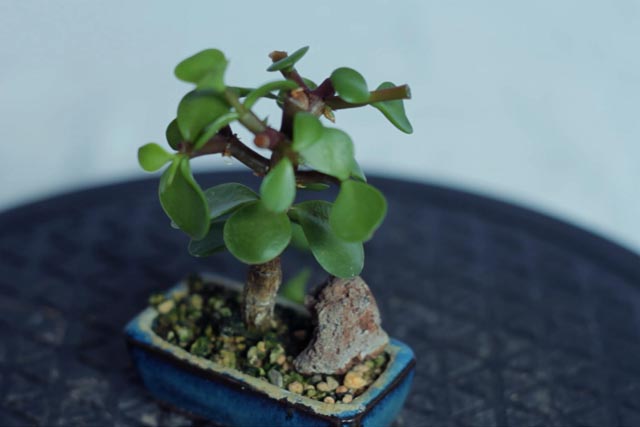
I would stay away from the variegated type; they can be a little fussy. You could also use a full size jade, but their proportions are not as nice as the portulacaria afra.
(You can read more about this trees suitability in – Is Portulacaria Afra A Good Tree For Bonsai?)
Olive
Given the right conditions olives will grow like rockets and they can make some of the most impressive bonsai you can find.
Olives are absolute beasts when it comes to their ability to handle abuse. They can take extreme pruning and root work and can also be neglected for some time. They are used to living under the harsh Mediterranean sun so can handle a little bit of dryness from time to time so they are really easy to keep alive.
They naturally have quite small leaves and they will get smaller with bonsai training. You will also need to trim them a lot as they are pretty aggressive growers.
They are a great tree to practice with as they are going to give you a lot of shoots to deal with. You are really going to understand what it’s like to see multiple shoots from one spot when you start working on them. It might seem a little much at first, but they are a great learning tree for a beginner.

They are also really easy to propagate so you can end up with a sea of olives that will need constant work.
The only downside is that they cannot handle extreme cold. They can handle cold and can handle frost. There is a misconception that they can’t, but I’ve had olives outside all winter and it’s been down to -5°C (23°F). I would say they did not enjoy themselves and there was a little die back… but they survived, because they are hardcore.
If you do get an olive, try to get the wild variety, they have much smaller leaves than the fruiting kind that you will often find in garden centres. I grew mine form seed and they are sort of a half way between the two, they are decent, but the wild variety is definitely the best.
(You can read more about this trees suitability in – Is An Olive A Good Tree For Bonsai?)
Privet
Privets are a distant relative to the olive and you can tell. Privets are equally as tough as olives, maybe even more so.
They are fast growers and respond well to pruning and other bonsai work. They can handle extreme work and are nearly indestructible. They really are one of the easiest plants to care for and they will root easily from cuttings.
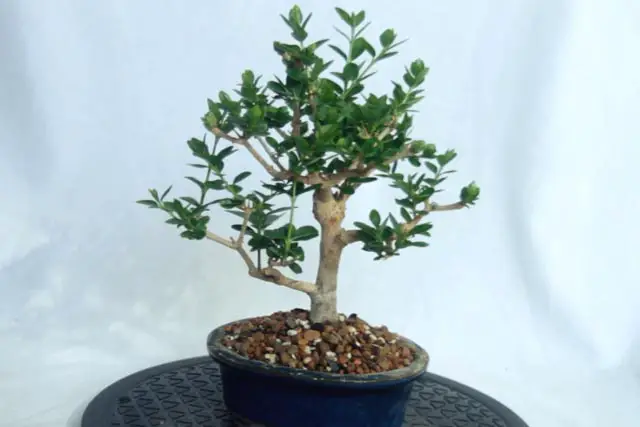
As they are commonly used for hedging they can handle low temperatures, so are happy being outside all year.
The major downside is the fact that they take forever to thicken. They need to grow to some absurd lengths before they start to thicken. If you are able to start with a piece that is already good and fat (like a stump from a removed hedge) you will very quickly have a great tree.
If you started with a twig like I did, you might still have a twig many years later, but they are still great to learn from.
(You can read more about this trees suitability in – Is Privet A Good Tree For Bonsai?)
Pomegranate
You don’t normally see pomegranate on these types of lists, but I have had nothing but pleasure from growing pomegranate.
I grew mine from seed and they germinated very easily and super quick. Since then they have just grew like crazy.
They are very aggressive growers and can handle some pretty drastic work. They just seem to bounce right back and keep on growing. They also respond really well to bonsai work and you can really reduce their leaf and branch size really well. They also root very easily from cuttings.
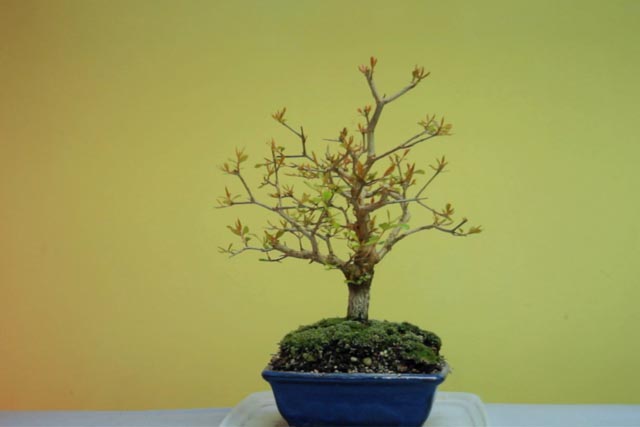
Care wise they are really simple. I haven’t had to do anything special and they seem to be able to take drying out slightly too, so they are quite forgiving.
The only downside is they are quite like the olive when it comes to the cold. They are not the biggest fan of it, but they can still handle it. I have one outside all year and it has got down to -5°C (23°F) and not had any trouble.
I do also find this outside one grows a lot slower than the ones I keep inside under my grow lights, but that is to be expected. However, the one outside is still doing great and for an outdoor tree, it would still be great for beginners.
(You can read more about this trees suitability in – Is Pomegranate A Good Tree For Bonsai?)
Ficus
Ficus is a very general term, as there a lot of different species of ficus. However, pretty much all of them are ideal trees for beginners.
They are fast growers and even faster at producing roots. They respond well to pruning and bonsai training.
Most ficus you can hack back to nothing and they will survive. The also root exceptionally easily which means you can do some extreme work or take cuttings to make more trees.
They are easily found as they are a very common houseplant. This also shows they are fairly easy to look after.

The downsides are that they can often have crazy roots that get too thick, but since you can pretty much hack them to nothing; you can practice your root training on them.
They also cannot handle the cold, so you would need to keep it inside.
(You can read more about this trees suitability in – Is Ficus Benjamina A Good Tree For Bonsai?)
Honourable Mentions
These are some trees I think are also amazing and would be good or a beginner or anyone interested in bonsai.
Chinese elm
The classic beginner tree is always the Chinese Elm. I have to agree they are excellent. They grow fast, they are nearly indestructible and they have the most wonderfully small leaves.
You can’t go wrong with them. The main issue people run into with them is keeping them inside and keeping them in the awful soil that they are sold in.

Once you sort that out, they are plain sailing. I haven’t had mine for that long, so I can’t comment fully on them, but I feel the roots may be a bit crazy and hard to keep under control. This isn’t ideal for a beginner, but the good thing is you can hack them back hard and they will just push out lots of new roots so I guess they make a good learning tree.
(Find out more about Buying An Elm Bonsai From Amazon)
Native Trees
If you’re a beginner, these are the trees you need to be using. Native trees are just trees that naturally grow in your area.
You will be able to get these trees easily. They are probably popping up in your garden now, like weeds, so you shouldn’t even need to pay for them.
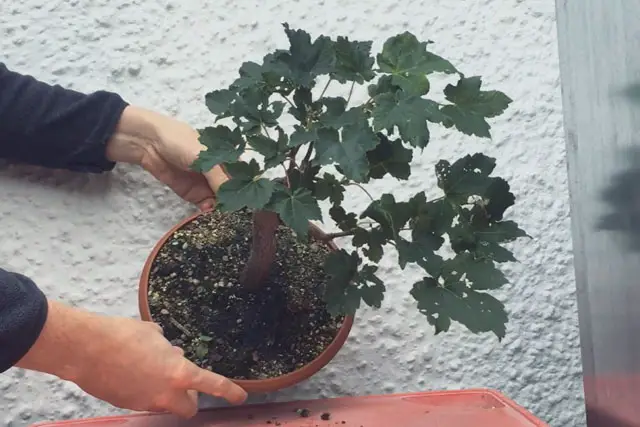
They also grow in your climate without issue, so you should find they are basically care free. You really can’t go wrong. This means you can just focus on practicing your bonsai techniques.
Some of these trees may not be ideal for bonsai, like the Sycamores I have, but they make excellent practice material and will really build your confidence while you learn.
Conclusion
If you are a beginner, try and start out with some cheap and simple trees. Get to know what it is like to care for a tree and then how to work on them. All the trees I have mentioned should give you this and also be strong enough to bounce back from anything you throw at them.
You will make mistakes in the early days and you will push trees to the edge and often over the edge, but that fine. That is how you learn.
Just get some trees and have some fun.
(You can read more about – Beginner Bonsai Advice – 5 Tips)

Hi, I’m Ian. I have been doing bonsai since 2014. I created this site to spread all the knowledge I have acquired over the years. Don’t forget to check out my Youtube videos where I show the progress of my own Bonsai each week or connect with me on social media.
You can read more about me and how I got into Bonsai on the About Page
