
Cold hardiness is often something you hear thrown around in the bonsai world, but trying to work out what it means and how it actually relates to your own trees can seem confusing.
However, it is actually quite important and you do need to know all about it to make sure you are growing the right trees for you area, and so that you can protect any bonsai trees that might not be suited to your area over winter.
Page Contents
What Does Cold Hardy Mean in Bonsai?
Cold hardiness is simply a trees ability to handle cold temperature. This information is then paired with a hardiness zone, which is basically the lowest temperature an area can get.
When you know these two things you can easily work out if a plant will survive the winter in a certain area.
The main scale we use is the USDA scale. Even if you are outside America, you should still find your area uses this scale.

By USDA-ARS and Oregon State University (OSU) – USDA Agricultural Research Service (USDA-ARS), Public Domain, Link
Its Only Temperature
It is very important to remember that this scale is just for temperature.
Just because a tree will not freeze to death in your area, doesn’t mean it will not suffer from other issues like too much rain. You will still need to take in other factors like light levels and rainfall as these can both affect how a tree grows.
It is also important to remember that some trees need a cold spell over winter, so if you live in a tropical climate, your trees may not freezes to death …but they may still struggle if they can’t go dormant.
(You can read more about – Working Out How To Over Winter Bonsai Trees)

How To Find Out Your Areas Hardiness Zone?
Finding your hardiness zone is just an easy internet search away …just type your country or general area followed by “hardiness zone” and you should be able to find a map showing the different zones and you can see what hardiness zone you are living in.
How To Find A Trees Hardiness?
The information about your tree is also found from another internet search. Just search the species name followed by “hardiness” and you should get some results telling you what it can handle.
As a rule of thumb, trees growing as bonsai are not going to be exactly the same level of hardiness as the results you get.
We grow our trees in small pots with shallow roots that are sat above ground. This is going to make them more cold sensitive compared to a large tree in the ground, which is what your search results will be showing.
If you look up a trees hardiness level I would take what you find as a very rough guide. I would in fact move two places up the scale and use that as your figure, just to be safe.
For example if a tree is hardy to zone 4, (–28.9°C / –20 °F), I would treat it like its actually zone 6 (-17.8°C / –10 °F ).
How The Hardiness Scale Works
Using the scale is really rather simple, you just need to look up your areas zone and use this as your baseline. Then you just need to cross reference this with your trees and see if they will survive.
Where I live is Zone 9, which is pretty mild. The coldest it will ever get is -6.7°C / 30 °F. That is now my baseline. I need to make sure any tree I own can go this low.
Example 1
If we look at a Japanese black pine they are hardy down to zone 6 (-23°C / -10 °F). If you use my advice and move it up two positions on the scale, as you are growing it in a very shallow pot, then it becomes zone 8 ( -12 C / 10 °F)
As you can see where I live is zone (9 -6.7°C / 30 °F), and the temperatures in my area do not get cold enough to upset the Japanese black pine. It can happily live in my garden all winter long problem free, even in a bonsai pot.
Example 2
If we look at a ficus, they are hardy down to zone 10, but we will move that to zone 12 since it’s in a bonsai pot. This means that it can handle temperatures down to 10°C / 60 °F
As my garden is zone 9, this is going to be a slight issue. My garden can reach as low as -6.7°C / 30 °F and while the temperature isn’t this every night, it totally possible that it can go this low and the ficus cannot handle this.
This tree cannot grow in my area outside as the risk would be too high. It would need to be protected over winter to make sure it doesn’t die from cold exposure.
What Bonsai Species Can Handle A Lot Of Cold?
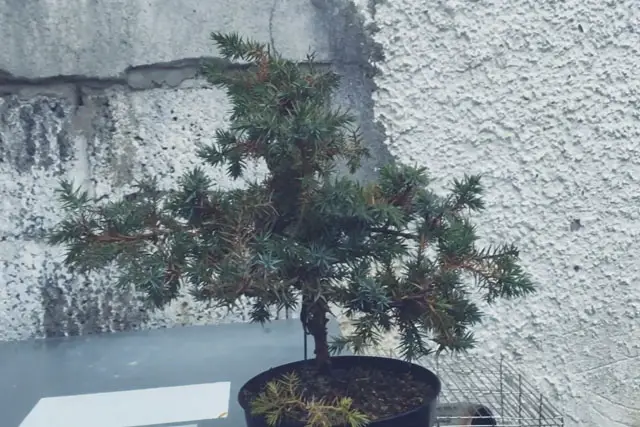
If you live in a particularly cold area, you will find that pines and junipers are going to be the best option for you.
You will need to check on the individual varieties, but in general these two species are going to be the most cold hardy and they can really endure a lot of cold. If you think about where they grow naturally, this makes a lot of sense.
Grow Bonsai Trees That Can Handle Your Climate
It is much easier if you can grow trees that can sit outside all year and happily live in your climate. Opting for native trees, or trees that naturally grow in your climate are usually going to be the best option.
You will not really need to worry about how hardy they are, as they are suited to your climate and there is probably never going to be any issues.
If you are not sure what these trees are, just look around and see what is growing in the ground. These will be the trees that can handle your climate.
(You can read more about – Are Natives Species The Best Trees For Bonsai?)
Growing Trees Outside Of Their Natural Climate
Bonsai is sometimes about growing a popular species and this might not be a species that is normally found in your area.
It can still be possible to grow these trees, you will just have to protect them in some way over the winter to make sure they are not exposed to the full force of your climate.
Temperate Trees In A Very Cold Climate
If you are growing temperate trees that can’t quite cope with your super cold winters, then you will need to protect them.
Depending on how much difference there is in the zones, this may be as simple as putting them in an unheated greenhouse, or having to actually bring them inside to over winter.
You will just have to judge this on an individual bases but it is extremely important to understand these trees care needs and know how hardy they actually are.
Some temperate trees can take more cold than you realise, but I also know some of you have winters that are extremely cold, which is exactly why you need to take the time to assess this kind of thing for your trees.
Cold Hardy Bonsai Trees In A Tropical Climate
If we reverse the problem and look at growing trees that can handle the cold in a tropical area, this can still be an issue.
If you live somewhere quite warm your trees are of course never going to face extreme colds, but this isn’t always ideal for trees. Many species, especially the cold hardy ones will actually need a winter chill. They need to go dormant over winter to stay healthy. Keeping them warm all year round is like keeping someone awake for days on end, it’s not healthy.
However, it is good to remember that most trees that need a cold winter don’t need to be freezing cold. They may be able to survive in very low temperatures, but you will find most trees go dormant between 3-10°C / 37-50°F.
Even if you live in a warm climate you may find that your mild winters are still cold enough to make a tree go dormant, so it’s not impossible to grow cold hardy trees in this type of climate given the right circumstances.
However if you climate really is tropical all year round, then you may find species that cold hardy will struggle. I suppose you could try and help them stay cold, but I’ve not heard of any one doing this and would probably be expensive and require some sort of refrigeration or something.
Indoor Bonsai/ Tropical Trees
Tropical trees are usually grown indoors as we know they cant handle the cold. We may not even assess their hardiness, as we kind of already kind of know they are not very hardy and will need protection.
If you are growing other trees inside, the usual candidates are Chinese elms and junipers …then what I’ve said above about cold hardy trees growing in a tropical climate applies here.
You house may not feel very tropical, but to a juniper or elm it certainly is. These trees are expecting a cold winter and your heated house is not offering them that. You might think you are keeping these trees safe from the cold, but you are in fact harming them by not letting them go dormant. You need to let your house get down to 3-10°C / 37-50°F so that they can go dormant and stay healthy, which isn’t going to happen, so really they need to somewhere else, which is usually outside.
(If do want to grow bonsai inside you can read more information about – The Best Trees You Can Use For Indoor Bonsai)
Conclusion
Understanding cold hardiness and knowing if your trees need protection from the winter cold is an important thing to know when growing bonsai.
It’s very easy to work out and if you are aware of it, then you should not have any problems, or lose any trees over the winter from cold.

Hi, I’m Ian. I have been doing bonsai since 2014. I created this site to spread all the knowledge I have acquired over the years. Don’t forget to check out my Youtube videos where I show the progress of my own Bonsai each week or connect with me on social media.
You can read more about me and how I got into Bonsai on the About Page
