
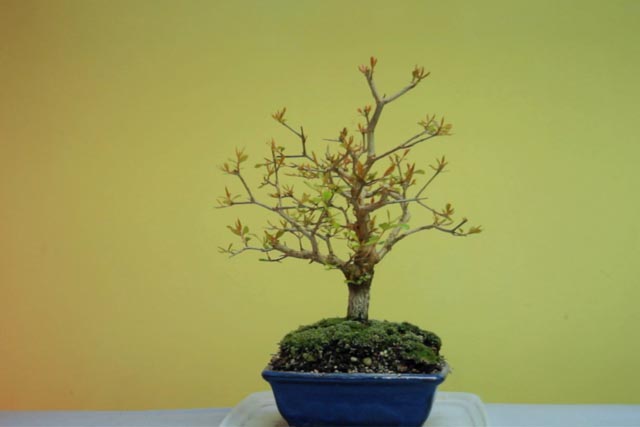
The debate about putting moss on bonsai has been ongoing for years. The simple answer is that you should be putting moss on your bonsai.
It’s as simple as that. The benefits simply outweigh any reason not to, but lets go through all the benefits and any negatives.
Page Contents
Benefits Of Having Moss On Bonsai
I will firstly go through all the reasons why moss is actually beneficial for your trees.
Moss Keeps The Soil In A Bonsai Pot
Covering the surface of your soil with moss stops soil erosion and keep the soil in the bonsai pot.
The moss literally grips the soil together and keeps it in place. Once you have moss established on the surface of your bonsai it is very hard to wash the soil off.
This is of course very important when we are dealing with small bonsai pots. Having soil wash out could be catastrophic for our bonsai trees and annoyingly it is very easily done. We use quite loose, light soil, which can easily be moved by water, so the moss can really make a difference and can help keep things more solid.
Moss Allows Your Bonsai To Use The Whole Bonsai Pot
Moss actually allows your bonsai to use the whole pot.
Imagine you have a 5cm deep bonsai pot and routinely the top 1cm dries out very fast. This doesn’t sound like a lot, but it’s actually 20% of the soil.
If this area keeps drying out too fast, roots in this area are probably not going to be able to grow very well. They will probably die before they are established due to drying out too quickly.
The moss on the surface actually keeps this top layer of soil a little moister for longer. The moss basically acts like a protective layer on top. Now that this top layer of soil is able to remain moister, and roots are much more likely to survive here.
So a simple layer of moss can now give us back the 20% of the soil we lost, meaning our bonsai trees can now grow in 100% of the soil we provide them.
In a small pot this little change can make a huge difference. It can really make the difference between a bonsai tree just doing okay and a bonsai that is thriving.
The more roots we can have in a pot, the happier a bonsai tree will be, so moss can be a real game changer when trying to achieve this.
Moss Requires No Nutrients
Moss also does not use up any of the nutrients in the soil. Moss only needs water and light to grow so it does not take any anything from the tree. You could argue that it takes some water, which it will, but realistically its uses such a small amount of water it will not affect how much you are watering.
Although moss doesn’t use any nutrients, it does actually act as type of filter. When the water passes through the moss it can actually filter out some of the harshness that is in the water, especially when you look at things like hard water.
If you ever look at your pots with moss, you will see the lime scale marks from hard water always form at the edge of the moss. This shows that the moss is filtering out the hardness of the water and its only building up at the edges where the moss is not.
It’s Natural
We must also remember that forest floors across the world are covered in moss. It’s literally the most natural symbiosis on the planet. Moss and trees coexist in perfect harmony in nature so there is no reason why they cannot work on a bonsai pot together.
Moss and Bonsai Looks Good Together
So this is a bit subjective, but I think the majority of us think that moss on a bonsai pot looks good.
I think it looks way more natural and can really bring a bonsai tree up a few levels, but then I do absolutely love moss.
However, if you ever go to an exhibition, most bonsai will have moss. A lot of them will have had the moss added specifically for the show, as they know it makes the tree look better.
Moss Has No Roots
Moss does not have roots. It only grows on the surface of the soil. It does not take up any space in the bonsai pot.
Bonsai pots are small and have limited space. If moss took up this valuable space this would be a problem.
If we look at weeds in your pots, this is a problem! They will actually send roots down and take up space in the pot that the tree could be using. A layer of moss does not take anything from the tree, it only adds all the things I have discussed above.
Negatives Of Having Moss On a Bonsai
While moss is great, it is not perfect, so I will go through some of the common negatives I hear all the time.
Can You Have Too Much Moss On A Bonsai?
The main argument for people being against moss on their bonsai is that it can overwhelm a pot, which can be true but this is easily fixed.
If you feel like the moss is getting too out of control you can simply just remove it. You can literally pick clumps out and thin it out this way.
Certain mosses can grow quite upright and if you feel they are getting too tall you can just trim them down. Moss is extremely hardly and can take this type of work with no problem. So long as there is light and water, it will just keep growing.
Moss On The Trunk Is A Problem
Moss can start to grow on the bonsai tree itself, which can be a problem. Most trees are surrounded by an outer layer of bark. The bark is actually dead tissue and although it is designed to protect the tree, the bark cannot protect itself.
If you allow moss to grow on the bark, moisture can become trapped underneath and over time the bark will rot away.
This is obviously not ideal as once the bark is gone, the tree will have no protection as well as not looking good (which is half the point of bonsai).
How To Get Moss Off The Trunk of A Bonsai
If you find moss growing up your bonsai tree it is best to remove it. You can try and pick it off but it is easier to just get a paint brush and some vinegar (any vinegar is fine).
Brush the vinegar on the moss and it will kill it. This will not harm the bark below. Obviously if you pour lots of vinegar into your pot it’s going to affect the roots and cause problems, but a light brushing just on the moss you want to remove will solve your problems.
Moss Blocks Water Penetration Into the Pot?
This is both true and false, It depends how your moss has been applied to your bonsai.
Basically, if you add moss while when you repot and let it slowly establish and spread, it will pretty much become a part of the soil layer. When moss is like this, water will pass through with no problem and as discussed above actually end up acting like a filter.
However, if you just go out and find a large slab of moss, and then place it on top of you bonsai pot. This probably will affect water penetration. If it’s just sat on the surface like this, it can block the water getting into the pot and can cause problems.
This means that the only way around this is to make sure you place your moss at the correct time and establish it correctly, so that it grows as a part of your soil layer, rather than just being sat on surface.
(You can read more about – Frequently Asked Questions About – Moss on Bonsai)
What Is The Bonsai Community Doing With Moss?
I’ve given you then Pros and the Cons around adding moss to your pots, and suggested that the benefits outweigh any issues. However, I asked my Youtube subscribers their opinion on things:
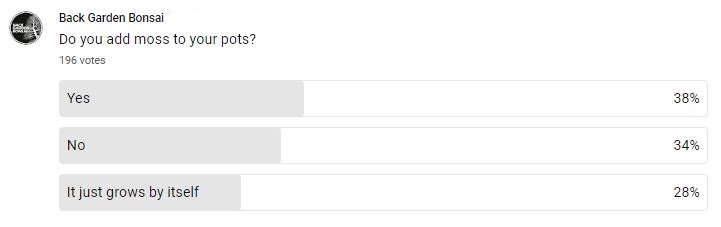
As you can see, the majority of people do add moss to their pots. If you add the 38% that actively add it, along with the 28% who have it grow by itself, we have 66% of people with moss in their pots.
Of course this is a small sample size, but most people are seeing moss as something they want. I am surprised that 34% don’t add moss, maybe they need to read the above information and change their minds.
Conclusion
Moss is great for bonsai, both for horticultural and artist styling of your tree. If you are not already mossing your bonsai trees, now is the time to start. It will actually benefit your trees in the long run, the benefits far outweigh any negatives.
(You can read about the Best Techniques for Applying Moss if you are not sure how to add it to your trees.)

Hi, I’m Ian. I have been doing bonsai since 2014. I created this site to spread all the knowledge I have acquired over the years. Don’t forget to check out my Youtube videos where I show the progress of my own Bonsai each week or connect with me on social media.
You can read more about me and how I got into Bonsai on the About Page
