
Root rot is exactly what it sounds like; it’s when the roots of your bonsai die and literally start to decompose and rot while still in the pot and attached to the tree.
This is not really that healthy for your bonsai and is a huge sign that something is wrong. In most cases it is caused by us, but there can be some other reason why it happens, which I will go through below and also try and give you some ways to prevent it, or try and fix the problem.
Page Contents
What Causes Root Rot In Bonsai Trees?
There are a number of things that can cause root rot and the biggest offender is us. Usually root rot is caused from less than ideal conditions and poor care that we have given the tree.
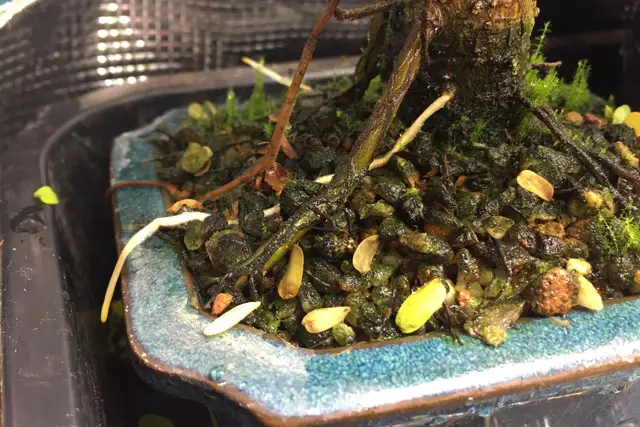
Another common cause is pathogens, such as bacteria that causes an infection and lastly, sometimes it is just some natural die back, which is nothing to really worry about.
At times it can be quite hard to work out what has actually caused the root rot, it can all look very similar, so you will need to do some deep investigations and be honest with yourself if you think you may have been the cause.
(Before I get into the different types of root rot, can read more information about – What Do Healthy Bonsai Roots Look Like?)
How Common Is Root Rot?
If you care for your trees properly, it should be pretty rare, but it can still happen. I have about 50 trees and I’ve had it happen maybe 2 or 3 times over the last 10 years, so really its not often and doesn’t effect a lot of trees.
However, I asked my youtube subscribers if they had ever had this problem and here are the results:
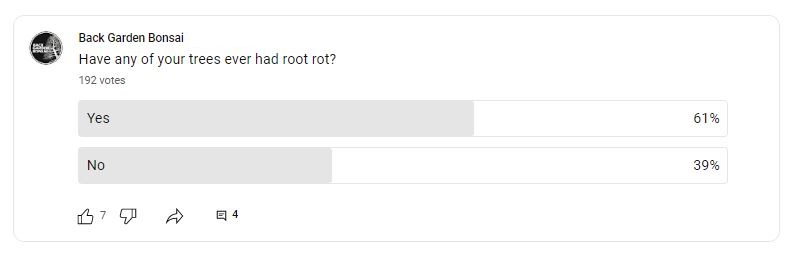
As you can see, 61% said they have suffered from root rot at some point. I am surprised it is not higher, most people usually suffer it at least once, but I guess it shows that it is not a big problem, and as I said, if you do everything right, you should be able to avoid it.
Root Rot Caused By Bad Care or Poor Conditions
As I’ve already said, we are usually the cause of the problem. We control the trees conditions and care, so if they are not ideal, that is on us.
What Does This Type Root Rot Look Like?
One of the first things you will notice when you have this type of root rot is that the top of the tree starts showing signs of a problem.
There will be wilting and even die back. You will also find that the foliage can turn yellow or brown. In some causes you may even find in some really bad cases that the trunk starts to feel soft and mushy.
It is more than likely that your soil is too wet and when you repot the tree the whole root ball will just feel sodden and too wet.
You may also notice that the roots smell awful, which makes sense, they are rotting.
The roots themselves will look awful. They will usually go black and will be mushy and soft and just look dead. It is really obvious when you look at them that there is a problem.
What Causes This Root Rot In Bonsai?
The biggest cause of this type of root rot is over watering (You can read more about – What Is Overwatering A Bonsai Trees?)
This is basically where the tree has too much water in the pot for a long period of time. This can be for a number of reasons, such as poor soil, poor drainage, or just actually giving it too much water too often.
When this happens the roots basically drown in the excess water and can’t get enough oxygen so they die off. Then the normal pathogens that can be found in the soil (that are harmless) start to decompose the roots.
This takes a while to happen and if you start to smell the rotting smell, it means your tree has really been suffering for a long time.
How To Fix This Root Rot?
Once roots are dead, they are dead. However, you can stop the problem from getting worse and if you deal with it in time, you can potentially correct the issue and get your tree back to health.
Basically you need to get rid of the excess water in the pot. This can be through improving drainage, managing how you water or even changing the soil to a mix that holds less water.
I would try and manage the situation until spring and then repot the tree then.
I would then remove the dead roots and then just try and use a better soil and a better pot, which should stop the issue from happening again.
Some people will say you should repot straight away, which can sometimes be the right move. If you really can’t manage the water levels properly, then a repot may be the best option.
If you are not able to make any improvements, then the tree is only going to get sicker and sicker and then die, so as a last ditch effort it might be the best move to repot.
Honestly, I think you can manage the situation. You can add less water, move the tree out of the rain and try and increase the drainage ability by drilling more holes in the pot. This can all be hard word, but for a couple of months until spring comes, I think it is doable.
Will It Recover?
Once you stop the problem, or manage it in a way that reduces it, you should see your tree stop getting worse and slowly recover.
It really depends how much damage has been done and how much you can fix the problem. If 99% of your roots have died, it’s going to be very hard for your tree to bounce back.
The sooner you can fix the problem, the more likely your tree is to recover.
Root Root Caused By Pathogens
Pathogens are everywhere, both in the air and soil. We can’t avoid them. Some are totally harmless, while others will totally destroy your tree.
What Does This Type Of Root Rot Look Like?
This root rot looks very similar to the root rot caused by over watering.
The top of tree will be affected and tell you something is wrong. There is going to be wilting and die back. The foliage is going to start yellowing or turning brown.
You will also find that if you cut into the tree you will see black areas inside the wood. It is like the infection is spreading up from the roots throughout the rest of the tree.
When you pull the tree out of the pot it will also have black roots that are clearly dead, especially at the tips. However, the soil may look great and not be too wet, which should give you a clue that it is maybe not an over watering issue.
What Causes This Root Rot In Bonsai?
This type of root rot is caused by a bacteria or fungus that gets into the tree and then feeds on the roots. This causes them to die, and then start rotting.
There are number of these pathogens, but Verticillium Wilt is a common one you will hear about in the bonsai world, especially for species like maples.
Usually these pathogens are only around at certain times of the year and they only attack certain species.
This does mean it’s quite rare to suffer from this, but the annoying thing is that if you do get an infection, it’s pretty much fatal for your tree.
The pathogens usually get into the tree through wounds, or damaged roots, which can actually be thorough cuts made when pruning. These types of pathogens can be quite dangerous around spring time, as this is when we do a lot of pruning of branches and root pruning.
How To Fix This Root Rot?
Honestly, you can’t do much. There are not really any chemical treatments, so your only hope is to repot the tree and try and remove any infected parts and hope the tree survives.
You should not delay this repot. It doesn’t matter when it is, just do it. This is also why you need to be honest with yourself and admit if you might be the cause of the problem.
If you are the cause, you can probably manage the situation and wait until spring, if everything you are doing is correct, but it looks like you may have a pathogen, then you need to repot right away.
You will need to get rid of the soil and anything you removed from the tree as the pathogen will be still there. Usually it is advised that you burn everything and then sterilise the pot properly before you use it again. You need to treat this tree like it is highly contagious as you really do not want the pathogen coming back or spreading elsewhere in your garden.
You will find that a good draining, low organic soil should help the pathogens struggle to survive going forward, but really you want to get rid of any traces of it from your tree.
Will It Recover?
Even if you repot the tree and remove any infected areas the chance of survival is still very low.
These pathogens can seriously weaken your tree and having to repot it and chop bits off just weakens it further and often by the time you realise what is going in, it’s too far gone to save.
Can You Prevent This?
The only way to prevent this type of attack is to keep your tree healthy. These pathogens are everywhere, so you can’t really avoid them.
If your tree is healthy and strong then they shouldn’t be getting into the tree in the first place.
Root Rot Caused By Natural Rotting
Sometimes roots just rot. Usually this is only a small percentage of the roots and isn’t really anything to worry about, but it is something to be aware of as you may come across it from time to time so it is good to know about, so you don’t start panicking.
What Does This Type Of Root Rot Look Like?
You will really only notice this when you are repotting the tree and it is different to the other two types of rot. The roots do not look black, just sort of dry and maybe a bit crispy.
What Causes This Root Rot In Bonsai?
Some roots will just die back from time to time. It is usually caused by them drying out, or getting damaged by frost.
You may also find that in certain species of tree an individual branch can be traced down to a single section of root (You will hear this a lot when people are talking about live veins).
If anything happens to that branch, like if you cut it off, or turn it into deadwood, you will find that the whole vein dies back and then of course the roots in that area die too.
It can also work the other way round. If these roots die, or you remove them, then the branch they where feeding will also die.
How To Fix This Root Rot?
This type of root rot is nothing to worry it should only be a very small percentage and you probably won’t even notice it has happened until you are repotting and find a few roots are dead.
Really all you need to do is just remove them when you are repotting.
Will It Recover?
You tree shouldn’t really have suffered, so it has nothing to recover form. If you removed a branch and then the root associated with it died, there is nothing you can do about this and you shouldn’t be too worried, you obviously removed the ranch for good reason.
Conclusion
As you can see there are a number of reasons your tree may have root rot and you will need to try and work out what might be causing it and then act accordingly.
Having your roots rot can be very detrimental to the tree, so it is very important you try and act quickly to work out the cause
(you can read more about – Developing A Nebari (Spreading Roots))

Hi, I’m Ian. I have been doing bonsai since 2014. I created this site to spread all the knowledge I have acquired over the years. Don’t forget to check out my Youtube videos where I show the progress of my own Bonsai each week or connect with me on social media.
You can read more about me and how I got into Bonsai on the About Page

