
The squamata juniper is small little evergreen shrub with wonderful bluish coloured needles. It is often called the Himalayan juniper and is also very well known as the Blue Star Juniper.
It is actually a dwarf juniper meaning it never really gets that big and is a bit slower growing than some other junipers. It is a very popular shrub in gardens as its blue foliage adds an interesting contrast in the garden.
It is used for bonsai, but it is not that common. Junipers in general are one of the most used trees for bonsai, but people seem to prefer other varieties over the squamata.
Page Contents
Is Squamata Juniper A Good Species For Bonsai?
Since it is a juniper you can safely say it is going to be good for bonsai. However, when you look deeper in to it you will see why squamata is not the most popular of the junipers to use.
Squamata is very small and slow growing which means it can better suited for a smaller tree. It can be hard to find material that is interesting and going to be good to work with. Most of what I have seen is too young for bonsai and anything that is a good size is too long, straight and boring looking.
There is also the foliage, while the colour is beautiful; it is a needle variety of juniper. There is nothing wrong with this, but most people prefer the varieties that have the softer foliage.
A squamata can make a great bonsai if you give it the chance, you may just find that you are able to source far better material to work with from other varieties of juniper.
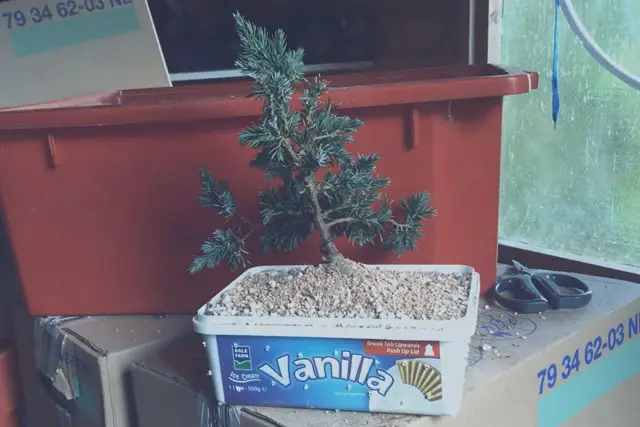
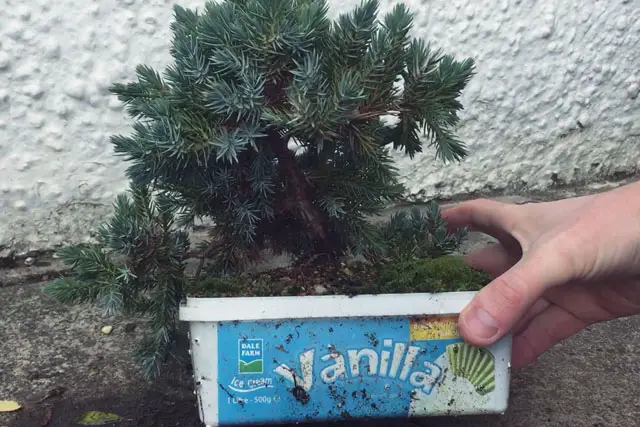
I am currently growing one from young material and I am going to pretty much leave it alone for many years. I will just keep trying to add movement into it as it grows in the hope that this pays off in the future.
You can see how its developing in my Squamata Juniper Progression.
Is Squamata Juniper Foliage Good For Bonsai?
The foliage on a squamata juniper is great for bonsai. It is a needle type foliage and it is quite prickly, which make its annoying to work with. However, the blue hue is wonderful to look at.
Leaf Size
The needles are already quite small, being a more dwarfed juniper they are just naturally the right size for bonsai. You can actually get them to reduce over time which will make your tree look even better.
Internode Length
The internodes on a squamata are extremely short. The tree is naturally very dense and bushy and you will find the needles are very close together before you even start working on them as a bonsai.
Is Squamata Juniper Growth Rate Good For Bonsai?
The growth rate is where the squamata will let you down. Junipers in general can be quite slow growers and they certainly take a long to develop powerful trunks. This is why it is so popular to source material that has been growing in the wild as it shortcuts this wait.
The squamata is a particularly slow growing juniper which can be quite frustrating for bonsai if you are trying to develop the tree first. However, once you get it developed and styled it will not need much maintenance.
Response To Pruning
Like most other junipers the squamata will respond very well to pruning and this is exactly what you want from a tree you are using as bonsai.
Back Budding
I have found the squamata to back bud quite well and it seems to be in line with how other junipers react. They are not going to react in the same way as a deciduous tree, but for a junipers standards they are great.
I have removed the tips from foliage pads to find plenty of back buds growing behind this. This allows for you to build very dense foliage pads, which is what can give your juniper its signature look.
Ramification
The good response to pruning and its ability to back bud along with tight internodes mean you can build up some really dense ramification very easily on a squamata which is perfect for bonsai.
Is Squamata Juniper Styling Ability Good For Bonsai?
Junipers are open to a number of different styles and it will really depend on the material you have that will determine what style will work best.
Wiring
You are going to need to wire you Squamata juniper. A lot of the branches can end up being quite straight and boring. You will need wire to give them more shape and actually give the tree a style and over all shape.
Sometimes the foliage pads can become a little too dense and you cannot wire these out fully, these can be managed with clip and grow, but if you can also thin these pads out and wire them out if you want.
Is Squamata Juniper Fall Colours Good For Bonsai?
As the squamata is evergreen there will be no change throughout the year and there will be no winter silhouette to enjoy.
This is part of the joy of junipers. The fact they do not at act the same a deciduous tree is all part of their magic.
Is Squamata Juniper Bark Good For Bonsai?
The bark on the squamata juniper is great. It is a deep brown colour and is full of textures and is very gnarly. Often juniper bark can start to peel off in areas and this adds extra cragginess and texture that I am huge fan of.
Deadwood Opportunities
Deadwood will work very well on junipers. You can have all sorts jins and shari all over the tree and it will add a lot of character and interest.
These look a lot better on older trees. If you have a young tree you are better to grow it out for a while, and then create these deadwood features. They make much more convincing bonsais this way rather than taking a young tree and styling it and adding deadwood straight away.
Are Squamata Juniper Roots Good For Bonsai?
The roots are what make junipers tricky to bonsai, but clearly due to their popularity as well as their ability to become world class trees, it would suggest the roots are not impossible to work with.
You just need to be careful with juniper roots, including squamata. You shouldn’t aggressively prune them or fully remove all the soil.
If you take this extra care you will have no problems and after a number of years you can get them down to size so that they can fit into a bonsai pot.
Is A Squamata Juniper Easy To Care For As Bonsai?
Squamata junipers are relatively easy to care for. They naturally grow in the Himalayas so surviving in your garden isn’t exactly asking much from them. So long as you give them the basics they are going to be happy.
You can read more in my Squamata Juniper Bonsai Care Guide.
Conclusion
Squamata juniper may not be a common tree for bonsai, but it is certainly very suitable for it. If you want a juniper in your collection you may be swayed by the other more common varieties. If you happy to find a squamata don’t dismiss them, they can very easily earn their right to be on any bonsai bench.

Hi, I’m Ian. I have been doing bonsai since 2014. I created this site to spread all the knowledge I have acquired over the years. Don’t forget to check out my Youtube videos where I show the progress of my own Bonsai each week or connect with me on social media.
You can read more about me and how I got into Bonsai on the About Page

Pingback: Squamata Juniper Bonsai Care – Back Garden Bonsai