English Ivy (Hedera Helix) is easily found growing in gardens and is basically considered a weed. However, people will still ask if it is worth the effort to dig it up and start trying to grow it as bonsai.
It is an interesting looking plant, so you can understand why people are drawn to it.
Page Contents
Is Ivy A Good Species for Bonsai?
English Ivy isn’t the best choice, but can be an okay tree for bonsai. It’s not really a tree; it’s a vine, which is one of the reasons why it’s not the best option.
It grows in a slightly different way and you will need to put in a lot of work, but with enough time they can be okay bonsai trees.
They are not really popular because of this, but you can find a few examples that look pretty decent.
I am currently growing one and its is quite the challenge, You can see how it is developing in my Ivy Bonsai Progression.
Is Ivy Foliage Good For Bonsai?
The foliage on ivy isn’t too bad. It’s evergreen and the leaves have a nice 3 lobed shape. There are a number of different varieties (included variegated) so you will need to check what variety you have, but most of them are suitable leaves for bonsai.
Leaf Size
The leaves are naturally not too big which is always good, but I have found they can reduce quite a lot which is very ideal for bonsai.
Internode Length
Being a vine, Ivy can grow in a slightly long and aggressive manor. This can leave you with some undesirable internodes lengths. It’s not the worst I have seen, but it is going to give you difficulties if you want to have a very small tree. Ivy is really going to be more suited for a slightly larger style of bonsai tree.
Is Ivy’s Growth Rate Good For Bonsai?
Ivy will grow quickly, but it is more in that sprawling vine way which can be very annoying. This also means that it does not thicken very quickly.
It just seems to send out very long shoots that do not really affect the thickness in the same way as an actual tree.
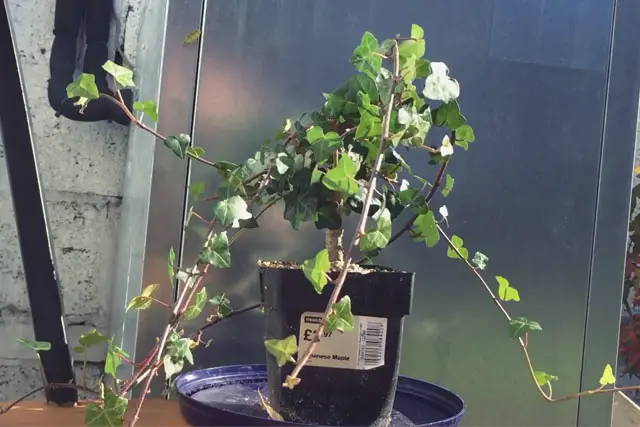
This can be quite frustrating and why it’s not the best for bonsai, however, if you can find a piece with a decent trunk you might be able to make something from it.
If you plan to take a small piece and thicken it up, it may take decades and even then you will not see great results and why it is better if you can find a thick trunk to start with.
they can also send out like aerial roots… well it’s kind of hard to explain, but if you have ever seen English ivy growing up a wall it will make more sense.
Have you ever wondered how they grow up things like walls? Basically the end of the shoot sends out little roots and these grab onto whatever surface it is against, such as a wall. They can then anchor themselves and keep growing, planting new anchors as they grow. This is why if you try and pull them off, it’s almost like they are glued on. This is also why they are so hard to get rid of. If you leave a bit behind, these little anchor roots will just start acting like normal roots and will keep that section alive and it will just keep growing.
Response To Pruning
Ivy will respond to pruning very reliably. It will always send out new shoot after you prune so you can start to build ramification fairly easily.
Back Budding
If you cut can ivy right back it will shoot new growth all over the place. However, I have found that when I just prune the branch tips it will only push new buds just below where I have cut. This is probably more ideal, as having endless new shoots pop out all over the place every time you prune is really annoying to keep on top of as you keep having to keep removing the unwanted ones.
Ramification
You can start to build ramification fairly easy with ivy. When it shoots out longer internodes it isn’t ideal, but you can usually work with what it gives you. Trying to build a super tight and fine ramified tree is difficult, but you can get some good results, especially if you are keeping your tree on the larger size. A larger ivy is going to look very proportional.
Is The Styling Ability Of An Ivy Good For Bonsai?
As Ivy is a vine you are going to have to do all the styling. This isn’t a tree you can just trim every now and again and hope it shapes itself. Ivy will want to grow long, thin and sideways, which isn’t exactly what we want in a bonsai.
This does mean that it is a blank canvas. It has no natural “tree” shape so you can go in any direction you want. Since it’s a broadleaf evergreen you are probably wiser styling like a deciduous tree, but you can do whatever you want.
Wiring
You will need to wire ivy and depending on your material, you may even need to wire the main trunk into the position you want. This is what I had to do as the plant did not want to grow in an upright manor.
Is Ivy’s Fall Colours Good For Bonsai?
Ivy is evergreen, so you will not get much of a show and you will not get any winter silhouette.
However, I have noticed that the underside of the leaves do become rather purple during winter. This does give you subtle change that will probably not be noticed by anyone apart from yourself, since you are the one looking at it every day throughout the year.
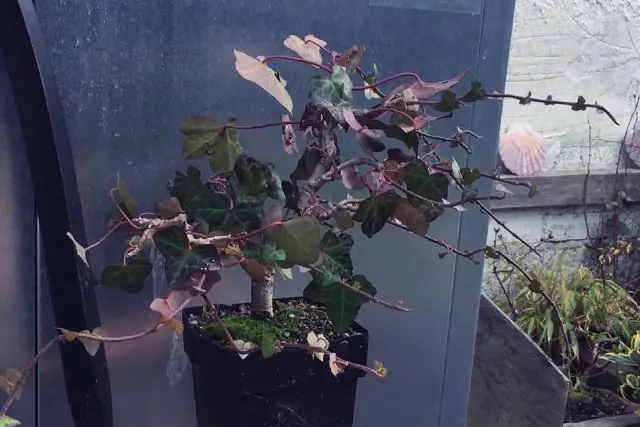
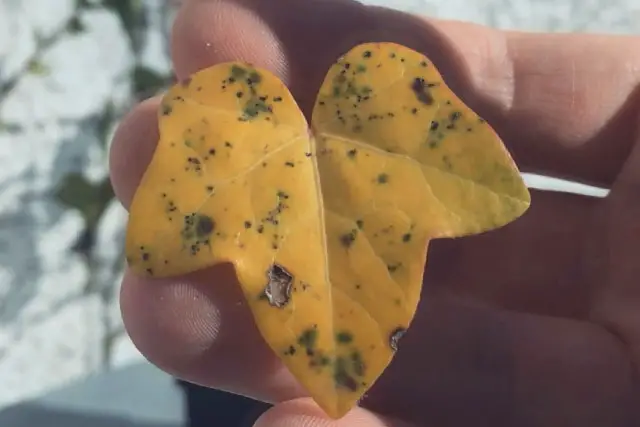
You will also find that some older leaves drop die off and turn yellow. This will one be one or two leaves, its really not a show at all, but they can still look nice
Does Ivy Have Good Bark For Bonsai?
Ivy bark is a little strange. As it is a vine it just seems a little different than a normal tree. This will probably have something to do with the little roots it sends out to grab on to things and anchor its self.
You can sometimes see these little roots along the branches and it’s just a little unusual. They look more like hairy bark rather, than roots. It doesn’t really take away from the tree, but It’s just interesting to notice them.
Deadwood Opportunities
Ivy would not be suitable for deadwood and I am unsure about carving.
If you had a really thick trunk you might be able to do some carving. It is not a species that automatically screams out to me that it is ideal for hollowing out. This is probably because most examples I’ve seen are quite thin. I have never really seen a super thick trunk. They just take too long to ever get this thick.
Are The Roots Of An Ivy Good For Bonsai?
Ivy is pretty much a weed and is the master of being indestructible. It is one of those plants where it is really hard to get rid of. If you are trying to remove it from an area you need to get every last bit of it out or it will just grow back. Pretty much any apart of the plant will grow roots.
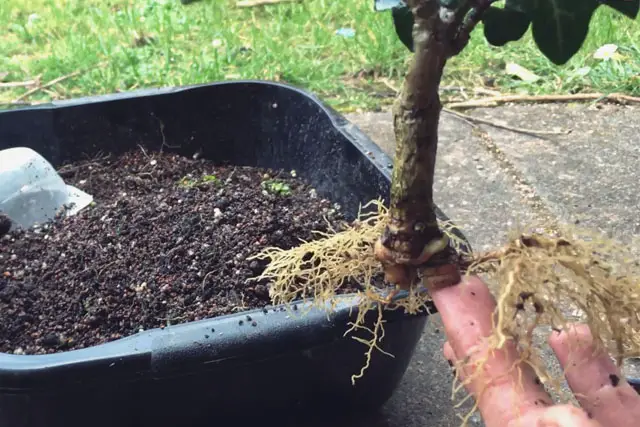
This is very good for us in bonsai as it means it can take some serious root work and is always going to bounce right back. I have found the roots quite nice to work with. I seem to be getting them quite fine and spreading out in a radial fashion, which is exactly what you want.
I think its invasive nature in regards to root growth is actually helpful for bonsai.
Is Ivy Easy To Care For As Bonsai?
As I’ve already said, Ivy is a like a weed. It just grows! You really need to give it very little care and attention. It doesn’t matter what it is growing in or what the conditions it is in, it will grow.
You will find it pretty hard to kill ivy, but you can still read my Ivy Bonsai Care Guide if you need to be sure.
Conclusion
Ivy is tough and an interesting tree (well, it’s a vine) and it can make an interesting bonsai. It’s not the most ideal choice for bonsai, but it’s also not the worst.
It’s very much the type of tree that if you happen to stumble upon one, they can be worth your time, but I wouldn’t go out of my way to own one.

Hi, I’m Ian. I have been doing bonsai since 2014. I created this site to spread all the knowledge I have acquired over the years. Don’t forget to check out my Youtube videos where I show the progress of my own Bonsai each week or connect with me on social media.
You can read more about me and how I got into Bonsai on the About Page