
Sometimes you end up with a new bonsai tree and you have no idea what it is. Maybe you dug it from a garden, or you just seen it in passing.
Either way, trying to identify a tree can be a nightmare. This guide will try and point you in the right direction and help you get to the bottom of the mystery.
Page Contents
How To Identify The Species Of Your Bonsai
The first thing you need to do is evaluate your tree and look at all its different features. Sometimes this will be enough for you to recognise what it is, especially if you have a good knowledge of tree species.
However, if you can’t identify the tree straight way, then you can take your search online, which I will cover below, but first I will go through the different parts of the tree that you need to be looking at to help you work out what species it is.

Study The Trees Features
There are a huge number of clues within your bonsai that can help you narrow down the search and help you identity what species it is.
Just examine the following features and take note of them, these will be the key to working out what type of tree you have.
The Leaves
Take note of the type of leaves. Leaves come in various shapes, colours and textures.
Look at every aspect of the leaf. Examine the top and bottom and the outer edge.
Most leaves have a common shape, round, oval, long, or thin. The more you can describe it, the better chance you have of a positive identification.
Also look at how the leaves are situated on the branch. Are they side by side, or do they alternate along the branch? Look at the little stem connecting the leaf to the tree. Being able to notice even these little things will help you.
The Buds
If it is winter, you can sometimes identify a tree by its buds. This is usually harder, but it’s still possible.
Just try and get as much information as possible. The size and colour are going to be crucial.
The Bark
Identifying a tree through the bark is very hard but it can be done. It is probably better when paired with other features.
The bark may have textures and colours you can describe. Also look at older wood compared to younger wood, There may be differences you can spot and describe.
The Roots
Roots are not commonly used to identify trees as they can all look very similar, but some species may have some uniqueness to them, they may be a different colour or growth habit and information like this can help you confirm an identification.
Any Other Features
A lot of trees have other unique features, such as flowers or fruits.
You may also see seeds or cones. These features can all be added to the list of things that will help you identify the tree.
Using The Internet To Identify A Bonsai
Once you have studied the features of your tree, the best place to go for further information is the internet and there are a number of ways you can use it to work out what tree you have.
Search Engines
Using an online search engines, you can be a great way to try and research what you already know about the tree to see if you can find any pictures that might match.
Try and input as many descriptions as possible and see what images you find. This is quite difficult, but it is possible to work out what type of tree you have from doing this.
Search engines are of course also going to bring up a number of websites that can help you out too.
Using Tree Websites To Identify A Bonsai
There are plenty of websites about trees, not just bonsai, and these can be a great place to start. They usually have pictures of the common features so you can compare to what you have and start to narrow down your search.
If they do not have the tree you are looking for, you should be able to at least see how they are describing certain features and give a clearer explanation to what you should be looking for.
You can then take this back to the search engines and try to refine your search further.
Using Apps To Identify A Bonsai
Identification apps can quite intersting, they usually ask you to take a picture of the tree you are trying to identify, or they ask you questions about the tree to help you narrow the search down.
The only problem with apps like this is that they seem to only know the really common trees. If you have something unusual (which is usually the case if you can’t identify it) then they do not really help.
They are worth a shot, but I wouldn’t get your hope ups. I would also double check any results you have from these. I have had them give me a result that was way off as it was an uncommon tree, so just be careful.
YouTube Videos
YouTube videos are only helpful when you think you have a rough idea about what tree you might have. You can use it to sort of confirm your suspicions.
I would start with the web searches and if you think you might have a certain species, then look it up on YouTube. Sometimes seeing the tree in video format can confirm if you are right or not.
I’ve double checked a few species in this way and it can be really helpful.
Books
I guess I should mention books too. They are still around, but really I imagine not many of us have books about trees lying around.
However, you could go to a local bookshop or library and flick through some books. Basically this is the analogue version of doing a websearch. If you have found this website, you understand how to use the internet, so that will probably be quicker for you, but books are still out there if you want to take it old school.
Study Your Bonsai Tree Throughout The Year to Identify Its Species
If you are having trouble indentifying your tree then you need take your time and study the tree throughout the year. It might take a while, but you will get an answer.
As the seasons change you might notice changes in the tree that can help you identify it.
I once thought I had found a tree seedling. I left it for a while and when I came back a few months later I was able to identify it as a weed.
I’ve also been able to identify trees I’ve found in winter by waiting until spring to see their leaves.
Sometimes you just need a little time to wait for the tree to show you one of the above features, to help you solve the mystery.
Are There Similar Trees To Your Bonsai Growing Near By?
You can also use the trees around you to help identify your mystery tree.
Look around and see if you can find any trees that are the same. This may seem pointless, but it can help.
I have a tree that I was told was a Poplar. I knew it wasn’t this, but I no other trees to compare it with. One day I was walking near my house and seen a tree with the exact same leaves. At the time I was still not able to identify it, but I could now confirm this tree near my house was the same as my “Poplar” that I was growing.
I then used the waiting technique and occasionally looked at this tree over a couple of months. During the summer it flowered, where my own one did not as it was too young.
However, from the flowers I was able to identify the tree as a lilac.
So keep your eyes out for matches of your mystery tree, you never know how helpful it could be.
Can You Identify The Species Of A Bonsai From Where It Is Growing?
As bonsai is growing in a pot, where it is growing is not helpful to us when we want to identify it.
However, if you have seen the same tree growing naturally in the wild, it is probably more likely to be native, or at least has been introduced to your area and is happy to grow there.
If you are looking at a potted tree, there is a potential it could be from anywhere in the world. Although, the benefit of a tree being planted in a pot means it will have an owner. You could also ask them what species it is. However, this doesn’t guarantee an answer.
The same is true for urban areas/gardens. The trees here will more than likely be owned by someone, but this does not mean they will know what they have planted in their garden.
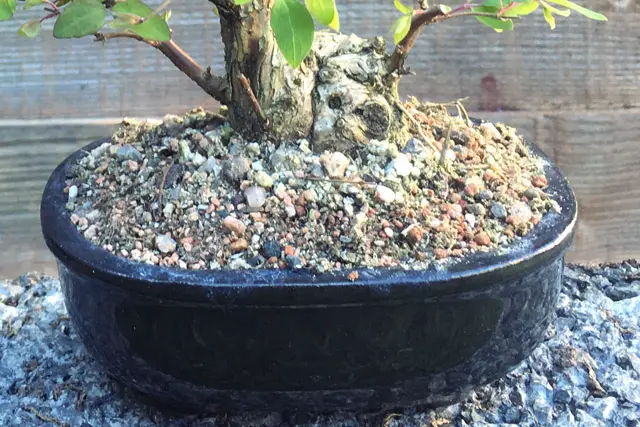
How To Identify The Species of An Established Bonsai?
If the tree you are trying to identify is already a bonsai, there is a very high chance that it is going to be a popular and well known species.
This will help narrow your search and you can start looking online for other bonsai trees that are similar and match the description of your tree.
How Can You Identify Seedlings That You Are Growing As Bonsai?
If you are trying to identify a seedling, just wait until they grow. Pretty much all seedlings look identical when they first germinate – two little round leaves.

You need to wait until the first true leaves develop. Then you can potentially identify the seedling from the leaves.
It’s usually best to wait until you can see a couple of leaves then you should be able to get a good idea of what you have.
Ask People To Identify A Bonsai For You
I would suggest you do this as a last resort.
You can do this online through Facebook/Intsagram/forums or whatever you like using. The big problem with this is people think they know what they are talking about when they do not.
I’ve seen countless people ask for an identification and then get some crazy wrong answers given to them.
(Feel free to message me, I’m always happy to try and help identify something, but I’m not an expert. Chances are I might not know too…I’ll just say I don’t, rather than guess)
If asking strangers on the internet sound like a bad idea, you can try and ask someone local, in person.
If you’re a member of a bonsai club, this would be the perfect place to ask someone.
My advice for asking anyone is making sure you take a clear picture of the leaves. I see too many blurred imagines, or ones taken from miles away. It feels like your trying to identify someone from really bad CCTV.
Just take a good picture, it will help you a lot.
I’d also take any answers with a huge pinch of salt. Pictures sometimes do not do a leaf justice and can throw people off, meaning you get a wrong answer.
Always double check what you are being told. If someone is telling you it’s an elm, go and look at 100 pictures of an elm online. Keep comparing your tree with pictures of what you’ve been told it might be until you’re happy it is actually that.
Even if 5 people tell you it’s an elm, they might be wrong, so double check.
At the end of the day, if you are not 100% happy, just accept it as an unknown and keep searching you will eventually the answer, even if it’s years later.
Conclusion
Identifying a tree is either going to be very simple or it will take you months of investigation, but you will eventually find the answer.
Just keep looking and keep an open mind until you are happy that you can confirm your tree and as I said before, if you have tried everything and are still stuck, drop me a message and I will see If I recognise it.

Hi, I’m Ian. I have been doing bonsai since 2014. I created this site to spread all the knowledge I have acquired over the years. Don’t forget to check out my Youtube videos where I show the progress of my own Bonsai each week or connect with me on social media.
You can read more about me and how I got into Bonsai on the About Page
