
Overwatering a bonsai is a big problem.
If you think your tree may be suffering from this, then you need to act quickly to try and correct it. If you ignore it then your roots can start to rot and you tree will die.
If you are not sure you should also read my article on- What Is Overwatering A Bonsai Tree? This will give you a good base knowledge on what causes the issues, so you can look out for what might be causing it with your tree.
You need to remember that overwater is not a onetime thing, it is when you tree is constantly dealing with excess water in the pot over a long time.
Page Contents
Signs Of An Overwatered Bonsai
As with most things with trees, nothing is ever clear cut. A lot of these signs could be caused by other issues so you will need to do a bit of an investigation into what might be going on.
You also do not need to have all of these signs for there to be a problem, you may find you only have one. Really if you notice any of them, you should start trying to work out what might be happening and deal with whatever it is.
Yellow Leaves
A lot of problems can cause yellowing of the leaves on your tree, but one of the main problems can be overwatering.
You may also notice that your growing tips start turning brown, or even black and dying back. If you notice any sort of yellowing of your leaves you need to try and work out what is causing it
(I have written a full guide on all the things that can cause yellowing – Why Has My Bonsai Got Yellow Leaves? (and How To Fix It))
Noticing A Poor Growth Rate
This is another symptom that can be caused by many things, but if you are noticing that your tree is not really growing much, when it really should be …your tree may be suffering from over watering and you will need to investigate further.
Constantly Wet Soggy Soil
This one is fairly obvious, if your soil is always too wet, then that is most likely a sign of overwatering.
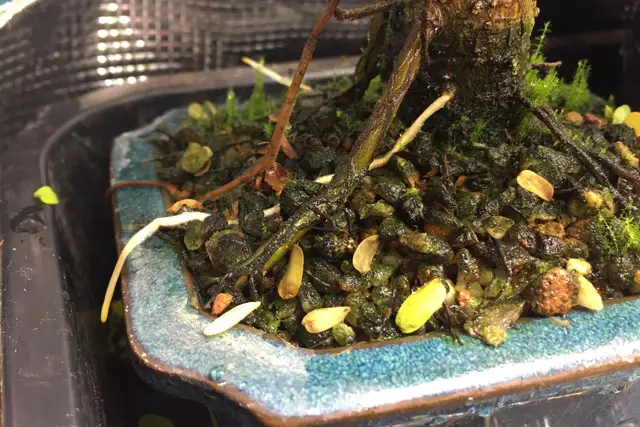
If you think this is the case you should really start paying attention to your soil and your watering. You should starting sticking something into your soil, like a chop stick to measure how wet the soil is and try and manage how much water it is getting so it only remains moist, and not soaking wet.
(I have a more detailed guide on How To Water A Bonsai, which will help you water properly)
Mould On The Soil Surface
Sometimes this can just be a leaf that has fallen onto the soil and decomposed, however, not always.
If you are seeing mould growing on the surface of the soil, then it probably means the soil is too wet and the organic properties of the soil itself are staring to decompose.
White mould on the soil surface is harmless, but it does suggest that the area is too wet. If the surface is too wet, then it means that below the soil is also going to be pretty wet, which as we know is not ideal for your roots and a real sign that your tree may be over watered.
Liverwort
If your trees are growing outside they may attract weeds and even moss to grow on the soil surface.
Moss is fine and weeds can be removed, but if you start to see liverwort growing on the surface that is a sign that things may be too wet.
Liverwort loves to grow in wet areas, so if you see it could be the first sign that your pot is holding too much water.
A Foul Smell Coming From Your Pot
If you get close to your tree and smell something disgusting, sort of like stagnant water, then you could be in a lot of trouble. Your tree shouldn’t really smell like anything, maybe a little earthy, but nothing offensive.
If you tree is giving off a foul smell it is most likely coming from your roots, which will be rotting. As they break down and decompose they will let off a foul smell. It’s fairly noticeable so you will not mistake it.
If you smell this I imagine you will probably have a few other signs that your tree is in trouble, so it should be pretty clear that overwatering is causing the problem.
(You can read more about – Root Rot In Bonsai (What Is It? and How To Fix It))
How To Correct A Bonsai From Overwatering
If you believe your tree is overwatered you need to correct the problem quickly. Overwatering takes a while to really cause damage, so you can often correct the problem before it gets too bad.
Better Water Management Will Help
Excess water in the pot is of course the main problem, if you can manage your trees water levels, then you should be able to solve the problem.
Usually reducing the water levels will stop the excess build up and keep things more stable. The first thing to do is make sure that you are watering properly and only giving the tree water when it needs it, so this may mean watering less frequently.
If you are finding the rain to be a problem then you need to move the tree to somewhere sheltered or try and block the rain from getting into the pot somehow.
In the past I have put large stones and bit of wood over the soil surface to stop the rain, obviously it doesn’t stop it 100%, but that is fine, you just want to be able to block the majority of it so that there is not too much excess.
Doing Some Pot Management Will Help
Sometimes you can adjust the pot so that if can drain better. The issue is excess water in the pot, so trying to remove the excess from the pot is sometimes easier than stopping it getting in there in the first place
If you are using a plastic or wooden pot, you can just drill some extra holes into the bottom and sides. This should allow more water to drain out, and hopefully ease the problem.
You may also find that just raising the pot up can help massively. I have found a lot of my plastic pots that are sat on the ground will struggle to drain. If I pick them up, there will basically be a puddle underneath them, which is not ideal.
The easy fix to this is to just raise them up slightly. I just use the lids from plastic water bottles. I just take a couple of them and place them under the tree. They act like little feet and just raise the pot up like 1cm. This is more than enough to give the pot some space and allow the water to actually drain properly and can really make a world of difference.
Soil Management Will Help
Really the best way to manage the soil is to replace it with free draining soil. However, you can only really repot a tree in spring time, so until then you need to try and manage the soil as best as you can.
You can take something long and thin, like a chop stick and poke some holes into the soil. This should allow a bit more air into the soil. It isn’t perfect, but paired with good watering and pot management it can help.
You will see this happen in the real world when groundskeeper come out onto football pitches with digging forks to poke holes into the soil to help it drain better when it is raining a lot.
Repotting Can Solve the Issue
As ive just mentioned, repotting is the best way to mange you soil.
If you think your soil is too wet then you need to manage it as best as you can until it is going to be safe to repot. Then when it is time you want to use a good free draining bonsai soil.
If you have ever had a tree in bad soil (such as trees from nursery’s) and then repotted it into good soil, you will really understand the benefit of good soil and what magic it can do for your trees health and ability to grow healthy roots.
If you think your tree may be suffering from root rot, you may find that just trying to manage things may not be enough. You may need to repot your tree out of season, which is really not ideal but it may be the only answer. Personally I would try and mange the situation and if after a few days you don’t think you can, then you should repot as a last resort.
Your tree is going to die if you leave it in the position it is in, so sometimes it is better to risk it and try and fix it with drastic measures, such a a repot. If you do this, you really need to make sure your repotting after care is very good, as you tree is going to be in a lot of trouble around this time.
Conclusion
Hopefully now you know what the common signs of overwatering are and how to deal with it before it gets too bad and kills your tree.
If you have good soil and are watering correctly, then you shouldn’t really have excess water in your pot, it should just be moist and the perfect conditions for you tree.
However, growing trees is a steep learning curve, so it’s very easy to face problems like this, but with a bit of investigation and correction, you can solve the issue before it gets too bad and you can get your bonsai back to being healthy.

Hi, I’m Ian. I have been doing bonsai since 2014. I created this site to spread all the knowledge I have acquired over the years. Don’t forget to check out my Youtube videos where I show the progress of my own Bonsai each week or connect with me on social media.
You can read more about me and how I got into Bonsai on the About Page

